
Himachal Pradesh
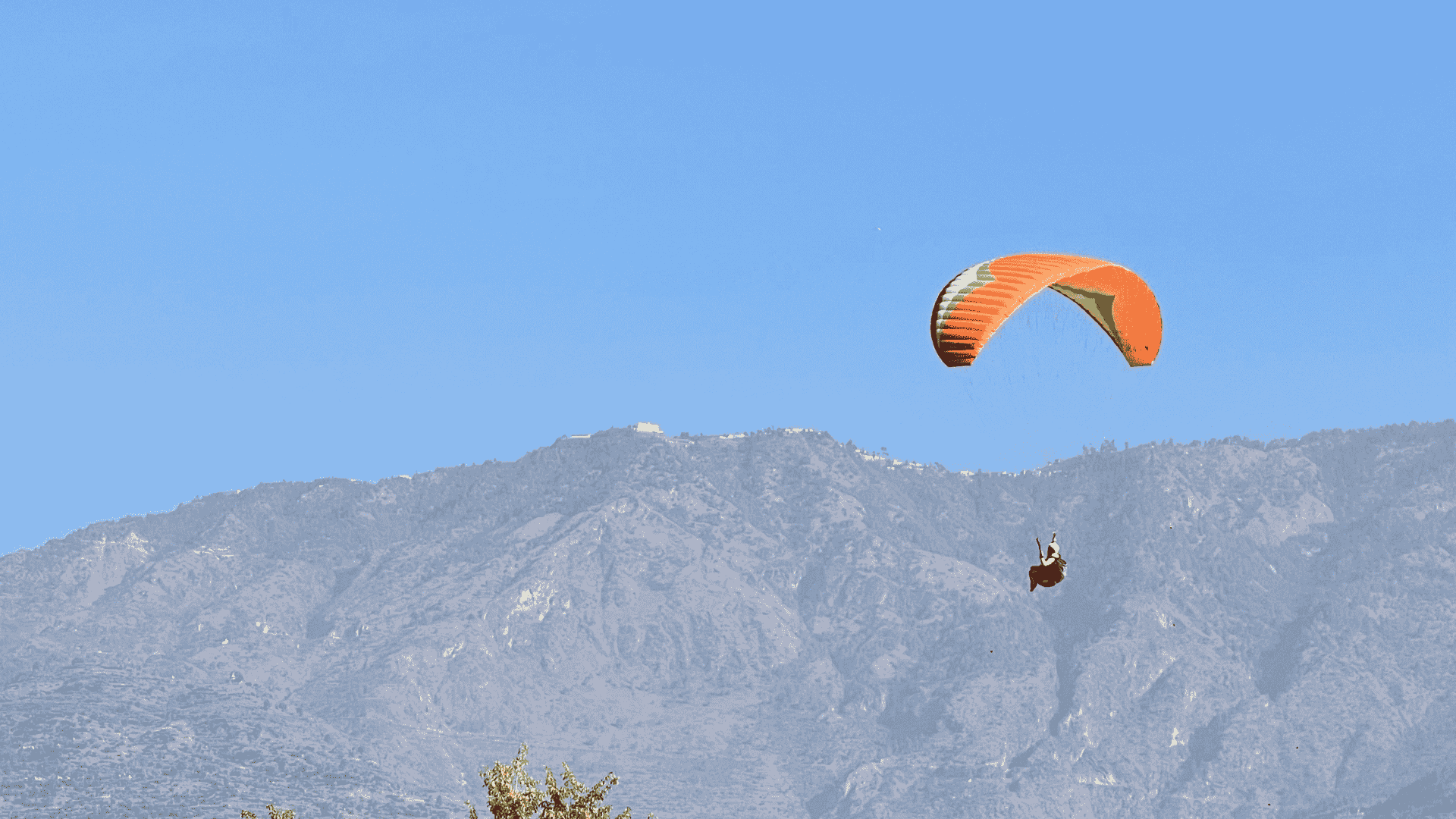
Paragliding at Bir Billing
India's paragliding capital — 2,400 m launches, world-cup heritage and the country's most serious cross-country terrain.
- Season
- Oct–Nov, Mar–May
- Launch altitude
- ~2,400 m
- From Dharamshala
- ~2 hr / 65 km
- Tandem from
- ₹2,500
What makes Bir Billing different
Bir Billing isn't just high — it's organised around paragliding. The Billing launch site at ~2,400 m looks down on the Bir landing area at ~1,400 m, a clean 1,000 m descent that pilots have used to set national records and host international competition. The Kangra valley below generates reliable thermals through most of the flying windows.
For tandem passengers, Bir offers the most dramatic scenery in Indian paragliding — snow ridges behind you, tea gardens and monasteries below. For rated pilots, it's the site where XC ambitions become real: 30–50 km triangles are routine on good days, and serious pilots have gone much further.
The tradeoff is logistics. Bir is a day's travel from anywhere, accommodation is basic-to-midrange, and weather windows are shorter and more volatile than Kamshet's. It's a destination, not a day trip.
Who Bir Billing suits
If you're a first-timer based in Western India, Kamshet is almost always the smarter starting point — cheaper, closer, and the learning environment is gentler. Bir rewards you more once you know what you're doing.
- Rated pilots chasing altitude, distance or competition experience
- Tandem flyers who want the maximum Himalayan visual payoff
- Training at P3 level and above — XC, thermalling, SIV preparation
- Travellers combining the flight with a Dharamshala or Bir village stay
FAQs
Frequently Asked Questions
Why is Bir Billing famous for paragliding?
Bir Billing hosted the Paragliding World Cup and offers one of the best launch-to-landing height differences in Asia — roughly 1,000 m of altitude gain potential. Thermal strength and valley orientation make it ideal for long cross-country flights.
When is the best time to fly at Bir Billing?
October to November (post-monsoon, strong thermals) and March to May (spring season). December–February can be cold with snow at launch; June–September is monsoon closure.
Is Bir Billing good for beginners?
Tandem flights are fine for beginners — the pilot handles everything. But for learning courses, Kamshet is usually better: gentler terrain, longer season and lower altitude make early flights less intimidating.
How much does paragliding cost at Bir Billing?
Tandem flights typically run ₹2,500–₹3,500 for 15–30 minutes. Courses and XC guiding are quoted per operator and duration.
Take the leap
Planning a Bir Billing trip?
The season windows are tight — sort dates early and keep a weather buffer.