Guide
Tandem or learn to fly solo — the honest comparison
One ₹3,000 flight or a ₹50,000 course? Both are legitimate — here's when each makes sense.
Guide
One ₹3,000 flight or a ₹50,000 course? Both are legitimate — here's when each makes sense.
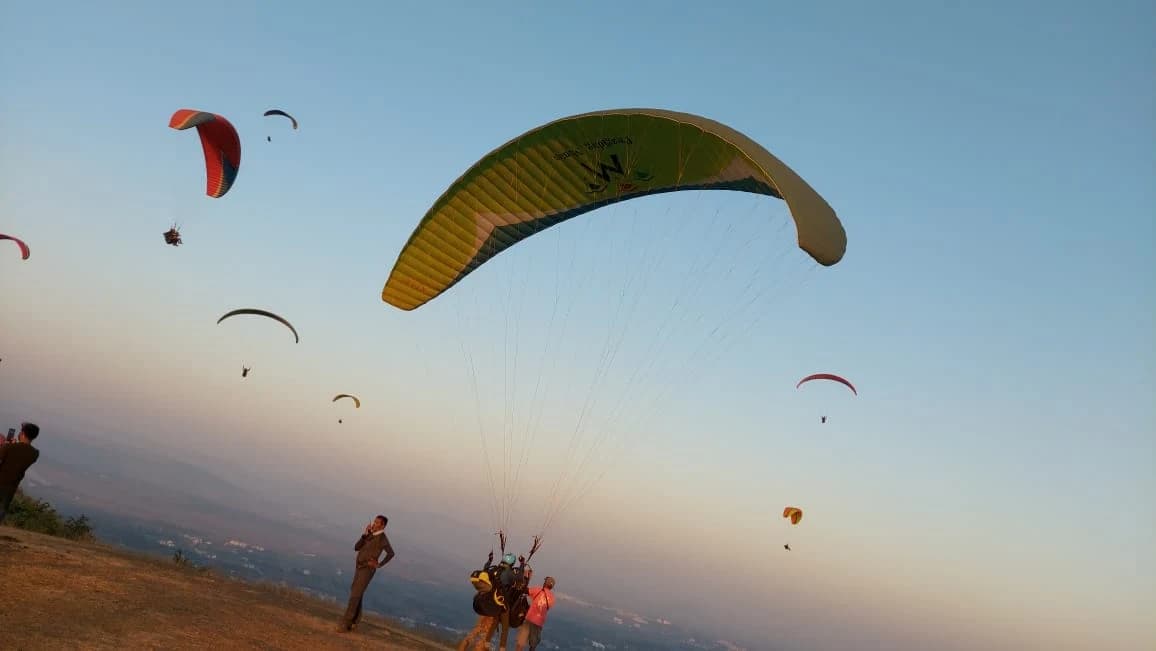
You show up, get harnessed, run a few steps, and fly. The pilot does everything; you're along for the view. It's done in a couple of hours, costs a few thousand rupees, and requires nothing from you but showing up.
Right for: one-time experiences, gifts, testing whether you actually like flying before committing, people who want the view without the training.
Solo means a course — P1 ground school through P2's first real flights and beyond. Days of training, theory, and progressive ratings. It's a skill you keep for life, but it's a commitment in time and money.
Right for: people who've done a tandem and want more, anyone drawn to the idea of flying themselves, and those willing to treat it as a real skill rather than a checkbox.
Almost nobody goes straight to a course without a tandem first. Do a tandem — ideally instructional, where you handle the controls — and the answer to 'should I learn' usually becomes obvious within minutes of being in the air.
If the answer is yes, P1 is the entry point. If it's 'that was fun but I'm done' — the tandem already did its job.
Yes — an instructional tandem is effectively a course taster. You handle the controls under supervision and find out if you actually want to learn before spending on P1.
P1 typically ₹25,000–₹40,000; P2 ₹40,000–₹70,000. Getting to a genuine independent rating (P3) usually means ₹1–1.5 lakh total across multiple trips.
Yes — schools routinely convert tandem passengers into P1 students. Tell the operator you're thinking about training; many will flag it during the flight.
Tell us your dates and location — we'll point you to the right experience.